


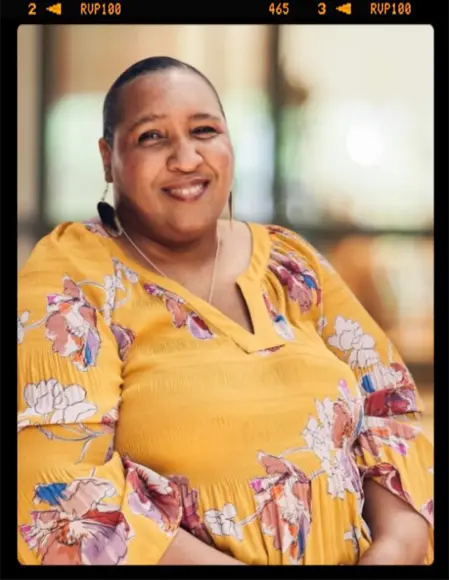
ELAINE HUGHES
About the author
Elaine Hughes is a Luxury Accessibility Experience Strategist and the creator of the F’AIRE™ framework. Founder of m Co, she is a CAE Graduate Access Consultant, a Forbes featured expert and a LinkedIn Top Voice, and won Inclusive Business of the Year (Hospitality) at the Empowerment Awards 2026.
THE NEW STANDARD OF LUXURY
The New Standard of Luxury
Why accessibility belongs at the heart of exceptional hospitality
There is a moment I have come to recognise at the front desk of very beautiful hotels. It arrives about ninety seconds after I give my name. A small pause. A glance at a colleague. Then the phrase that ends all luxury: “Let me just check.”
Nothing has gone wrong, exactly. The flowers are perfect and the champagne is at precisely the right temperature. But the guest who was meant to be expected has become a question to be answered, and the spell, the whole promise of the house, has quietly broken.
Luxury has spent decades perfecting one idea: the guest should never have to ask. It will remember a favourite flower for ten years, yet not ask how a guest prefers to communicate, whether the room will be too loud, or what would make the stay feel effortless. Luxury has mastered personalisation. What it has not yet recognised is that accessibility is that mastery at its most sophisticated.
The rules we inherited
Somewhere along the way, hospitality absorbed a set of unspoken rules about accessibility, and almost nobody has thought to question them.
The first is that accessibility is compliance, a matter for the facilities file and the legal team. No great house would describe its service standard as “what we did to avoid a complaint”, yet that is exactly how accessibility is framed.
The second is that accessibility is a room. One adapted suite, photographed once, tucked at the bottom of a web page. Anything beyond it becomes a “special request”, hospitality’s polite phrase for “we had not thought of that”.
The third is that accessibility is for someone else. The World Health Organization estimates that 1.3 billion people, around 16% of the world’s population, live with a significant disability. In Italy alone, ISTAT counts 2.9 million people with severe limitations in daily life. Add the grandparent who will not mention the stairs, the guest whose hearing is fading and the child who cannot bear a banqueting hall, and “someone else” begins to look rather like the guest list.
The fourth, and the most expensive, is that if nobody has complained, all is well. Disabled guests rarely complain. They quietly shortlist elsewhere, and an abandoned enquiry is never recorded as a loss because nobody knew it was there.
Beyond the physical
Accessibility is not only about who can enter a building. It is about who can enjoy everything that happens once they arrive.
Consider an international guest, an accomplished businessperson whose first language is not English, who finds a long telephone call about complex arrangements exhausting. Offering WhatsApp or email, with translation support, is not a convenience. It is accessibility. Consider a neurodivergent guest at a private members’ event, who admires the setting but is undone by the lighting, the noise and an unannounced change to the evening’s programme. A quiet room and clear information in advance transform the experience. Neither needs a physical adaptation. Both needed a team that had thought about them before they arrived.
Today’s affluent guests span generations, cultures, languages and family structures. A single exclusive use booking might include a grandparent with reduced mobility, a child with sensory sensitivities, a guest who needs a prayer space and cousins who prefer three different languages. These are not unreasonable demands. They are simply modern families, and exactly the guests luxury says it wants. The clientele is changing in another way too: the Return on Disability Group notes that the wealthiest generation is only now beginning to age into disability.
Prepared, not just welcoming
Almost everyone in hospitality wants every guest to feel valued. But there is a gap between being welcoming and being prepared, and guests fall into it every day. A beautiful adapted suite is worth little if the reservations team cannot describe it, and what a guest shares on Monday must reach the person serving them on Friday. The journey, after all, begins at the website, not the front door.
That gap is why I created F’AIRE™, the framework behind my work with The Inclusive Hospitality Co. It asks a deliberately simple question of any house: is inclusion visible in your policy, your practice and your evidence? It does not impose a single standard. A fifteenth century palazzo, a boutique hotel and a private island have different constraints. The point is intention: inclusion considered deliberately and built into the experience, rather than discovered when something goes wrong.
Luxury is the removal of friction. Who understands friction better than the guest who meets it at every turn? Design an experience that works beautifully for the guest with the most demanding needs and you have not compromised your standard. You have written it.
Accessibility will not be an add on or a special request. It will be part of the invisible architecture of outstanding hospitality. Because true luxury was never about having everything you could want. It is arriving somewhere and finding that you were expected.
